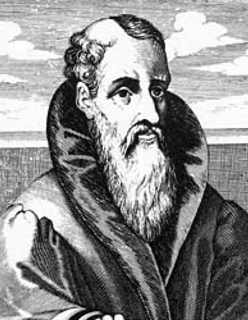
Boethius
Full Name: Anicius Manlius Severinus Boethius
Birthdate: AD 470
Birthplace: Rome, Italy
Date of Death: AD 524
Occupation: Christian Philosopher
Profile: Best known for
The Consolation of Philosophy.
Website: http://en.wikipedia.org/wiki/Boethius
Number of Quotes: 34
A man content to go to heaven alone will never go to heaven.
All composition is subject to dissolution.
A fundamental principle stating that anything made of parts can be broken apart and will therefore decay and die. This contrasts
with the simple, indivisible, and eternal nature of God.
All fortune is good fortune; for it either rewards, disciplines, amends, or punishes, and so is either useful or just.
And no renown can render you well-known: For if you think that fame can lengthen life By mortal famousness
immortalized, The day will come that takes your fame as well, And there a second death for you awaits.
Balance out the good things and the bad that have happened in your life and you will have to acknowledge that you are still way ahead. You are unhappy because you
have lost those things in which you took pleasure? But you can also take comfort in the likelihood that what is now making you miserable will also pass away.
Contemplate the extent and stability of the heavens, and then at last cease to admire worthless things.
For in all adversity of fortune the worst sort of misery is to have been happy.
For things are eternal which, now that they exist, do not begin to be.
From the complex discussion on eternity, distinguishing between things that are perpetual in time
and God's true eternity, which exists outside of time.
Good men seek it by the natural means of the virtues; evil men, however, try to achieve the same
goal by a variety of concupiscences, and that is surely an unnatural way of seeking the good.
He is nowhere Who is
everywhere.
A profound theological statement about God's
omnipresence. Since God is not limited to any
specific location, one cannot point to a place and say He is there
in
a way that excludes His presence elsewhere.
He who has fallen had not a steady step.
A moral observation that a person's downfall indicates they were not on a firm foundation of virtue to begin with.
He who is virtuous is wise; and he who is wise is good; and if he is good, he is happy.
How happy is mankind, if the love that orders the stars above rules, too, in your souls.
A poetic expression of the ideal state of humanity, where inner harmony reflects the divine love that governs the cosmos.
Human nature possesses this innate quality: it regards nothing as secure which it has
once been able to shake, and truth is never made false by being called into question.
A defense of philosophical inquiry, arguing that true beliefs can withstand doubt and scrutiny.
I scarcely know the meaning of your question; much less can I answer it.
If there is a God, from whence comes so many evils?
If there is no God, from whence comes any good?
A classic formulation of the problem of evil, which Lady Philosophy must address in the Consolation.
If there is anything good about nobility it is that it enforces the necessity of avoiding degeneracy.
In other living creatures the ignorance of themselves is nature; in man it is vice.
In every adversity of fortune, to have been happy is the most unhappy kind of misfortune.
A common alternate translation of the famous line about lost happiness.
It is the nature of human minds to invent always more than is necessary; and of this restless
and superfluous ingenuity, that part which is profane hath given us so many false gods...
A critique of humanity's tendency toward unnecessary and often impious complexity.
Music is part of us, and either ennobles or degrades our behavior.
Nothing is miserable but what is thought so, and contrariwise, every estate is happy if he that bears it be content.
Perhaps the most famous Stoic idea in the Consolation. It argues that suffering is not
inherent in external events but is determined by our perception and judgment of those events.
O you who set the world in constant motion, and who bind the earth to yourself in an eternal bond...
The opening of one of the majestic poems in the Consolation, a prayer to
the Creator who governs the universe with stable laws.
So nothing is ever good or bad unless you think it so, and vice versa. All luck is good luck to the man who bears it with equanimity.
The good is the end towards which all things tend.
A core principle of Boethius's
(and Aristotle's) ethics, stating
that the Supreme Good is the ultimate goal of all existence and action.
The human race lives by superlatives alone.
A comment on human nature's tendency to think in extremes and absolutes.
The love by which heaven is ruled.
A beautiful and famous line expressing the Neoplatonic and Christian idea that the cosmic order is maintained not by brute force but by divine love.
Then a false vision, not the reality of things, imposed itself.
Refers to being deceived by the illusions of Fortune (wealth, power, fame) rather than perceiving the true, unchanging nature of reality and the Good.
To be loved for one's own true self is a far greater thing than any wealth or power.
An argument that genuine human connection, based on virtue, is of greater value than all the gifts of fickle Fortune.
Where there is no grief, nor fear, nor any other torment that one may list, nor is
death a cause for grief or fear, but death is the final end of grief and fear.
A description of the state of blessedness and true happiness, which is freedom from earthly passions and fears.
Who would give a law to lovers? Love is unto itself a higher law.
Whoever is virtuous is powerful; whoever is vicious is weak.
A central Socratic argument in the Consolation. True power is the ability to achieve the good, which
only the virtuous possess. The wicked, by being slaves to their passions, are ultimately powerless.
Why, then, O mortal men, do you seek after happiness outside yourselves, when it lies within you?
A direct challenge from Lady Philosophy. Since true happiness is a state of the soul found in virtue and the knowledge
of God, it cannot be found in external, transient things.
You have forgotten who you are.
The powerful accusation Lady Philosophy levels at the lamenting Boethius at the very beginning of the Consolation. His despair stems from
his amnesia of his true nature as a rational being destined for God.

 Last on Earth